RentSplitter
Timeline
July-August 2024
(2 months)
Role
Product Designer
UX researcher
Tools
Figma
Team
Maura Sweeney
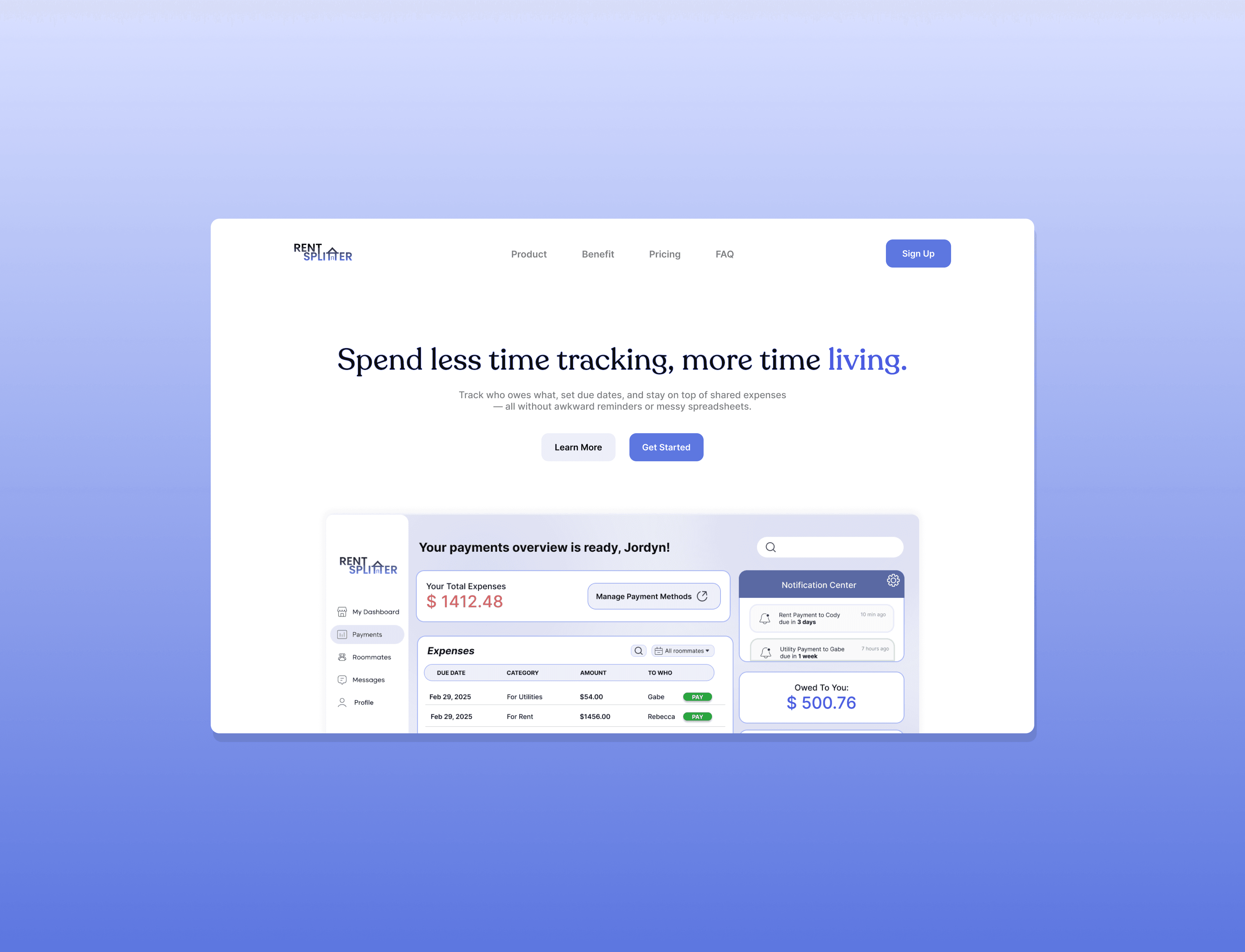
Rent Splitter is a seamless rent management platform designed to help roommates track payments, communicate effortlessly, and ensure financial accountability. By centralizing shared expenses, it eliminates financial miscommunication and simplifies rent tracking—making co-living stress-free and transparent.
Sharing apartments or houses often puts the responsibility of paying the total rent on one individual, who then has to collect repayments from the others. This can create a significant burden for the main payer, from chasing payments to managing due dates and amounts. Not only does this add stress in terms of keeping track of finances, but it can also lead to confusion or strain relationships when payments are late or unclear.
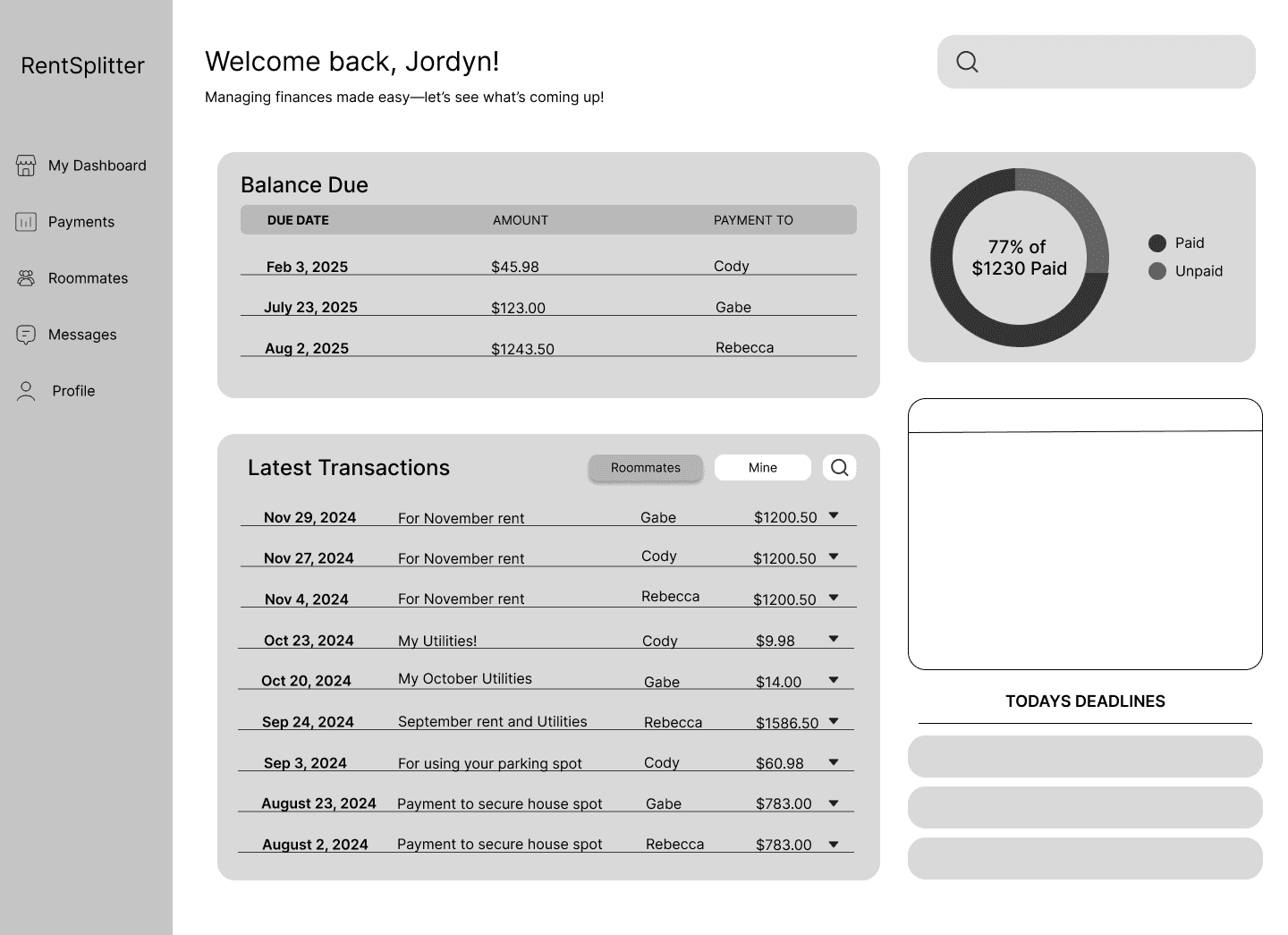
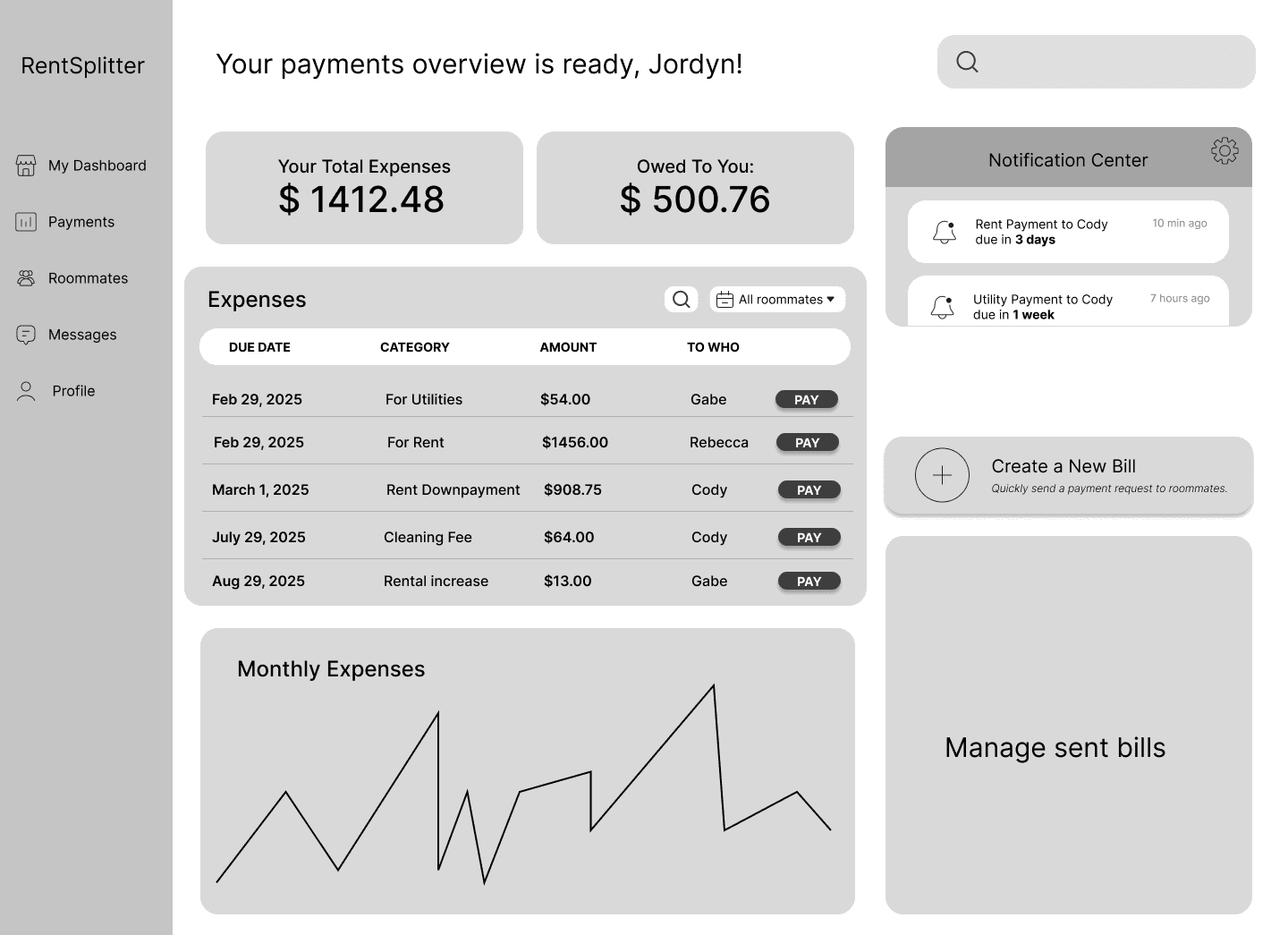
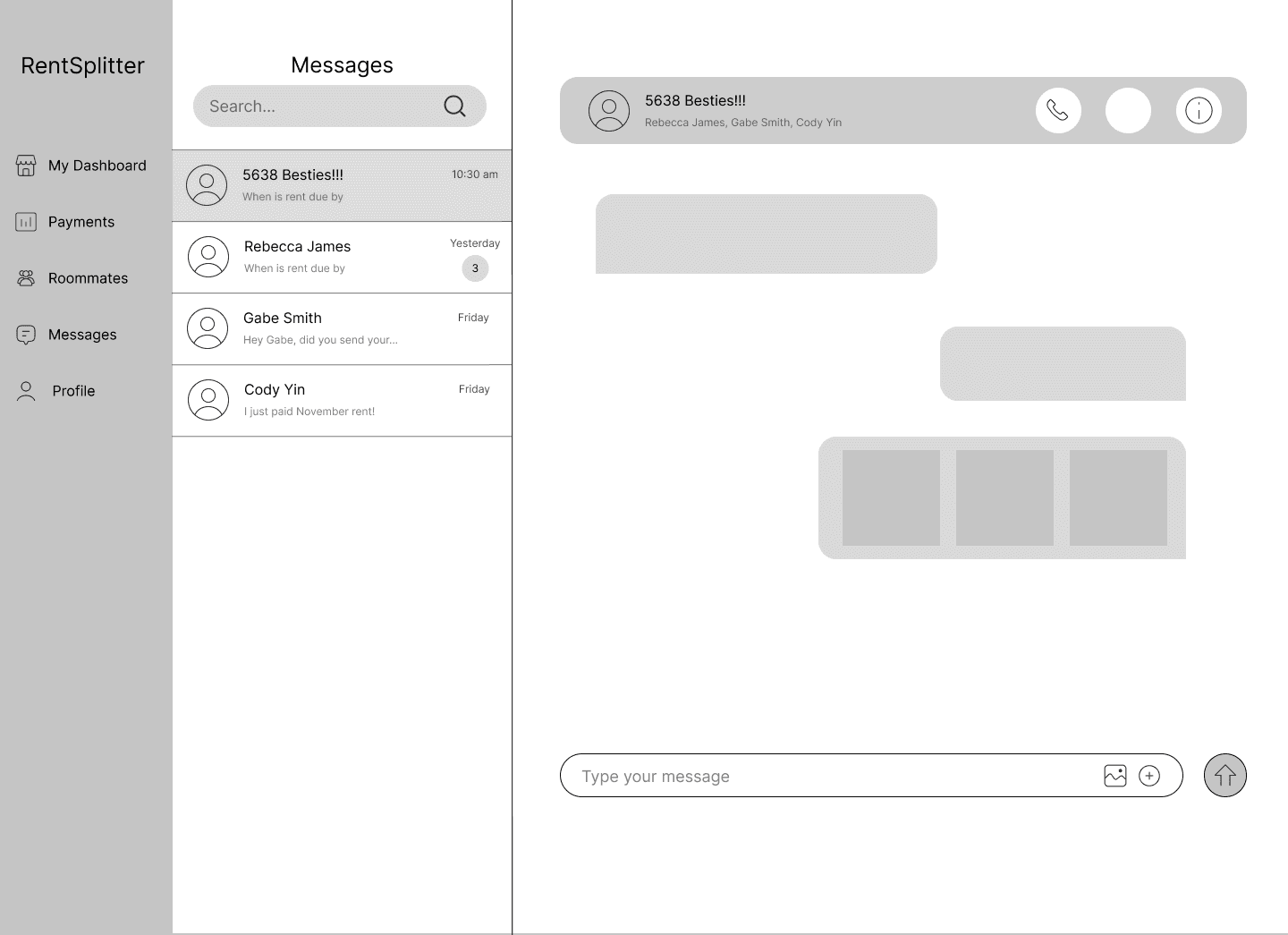
While this project envisions a comprehensive rent management platform, this case study focuses on designing the core features that have the highest impact: Dashboard, Payments, Roommates, and Messages. These four areas are essential for simplifying rent tracking and roommate collaboration.
Since our app focuses on rent splitting, our main demographic is college students, Gen Z, and young adults. For many, managing rent and utilities is a new challenge, as they transition from financial dependence to independence. Tracking payments, meeting deadlines, and handling roommate dynamics can be stressful, making financial organization and accountability a major pain point. They seek simple, automated solutions to avoid the awkwardness of reminders and the hassle of tracking shared expenses.
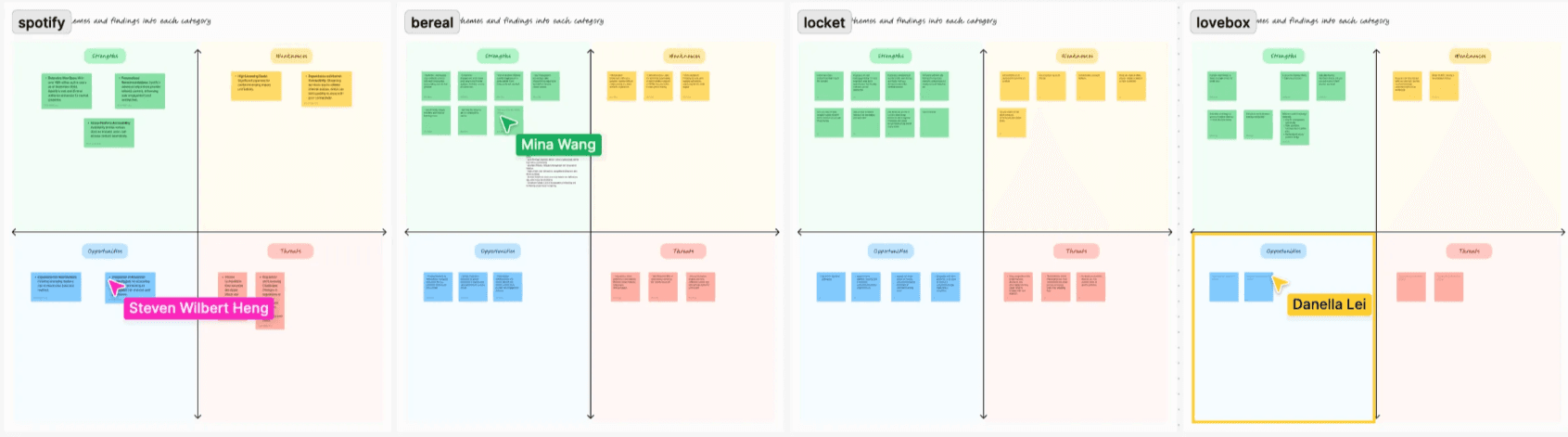
To understand how young adults manage rent and shared expenses, I began with a broad survey targeting 60 college students and young professionals. This allowed me to collect quantitative data on general pain points, helping me identify trends and common challenges across a larger group. Based on these findings, I conducted follow-up interviews to dive deeper into specific behaviors, frustrations, and unmet needs.
While the survey provided useful data, it lacked the depth to understand why these pain points existed. To explore the underlying challenges and emotional aspects of rent-splitting, I conducted one-on-one interviews with select participants from the survey group. This helped me uncover deeper frustrations, behaviors, and expectations that guided my design decisions.
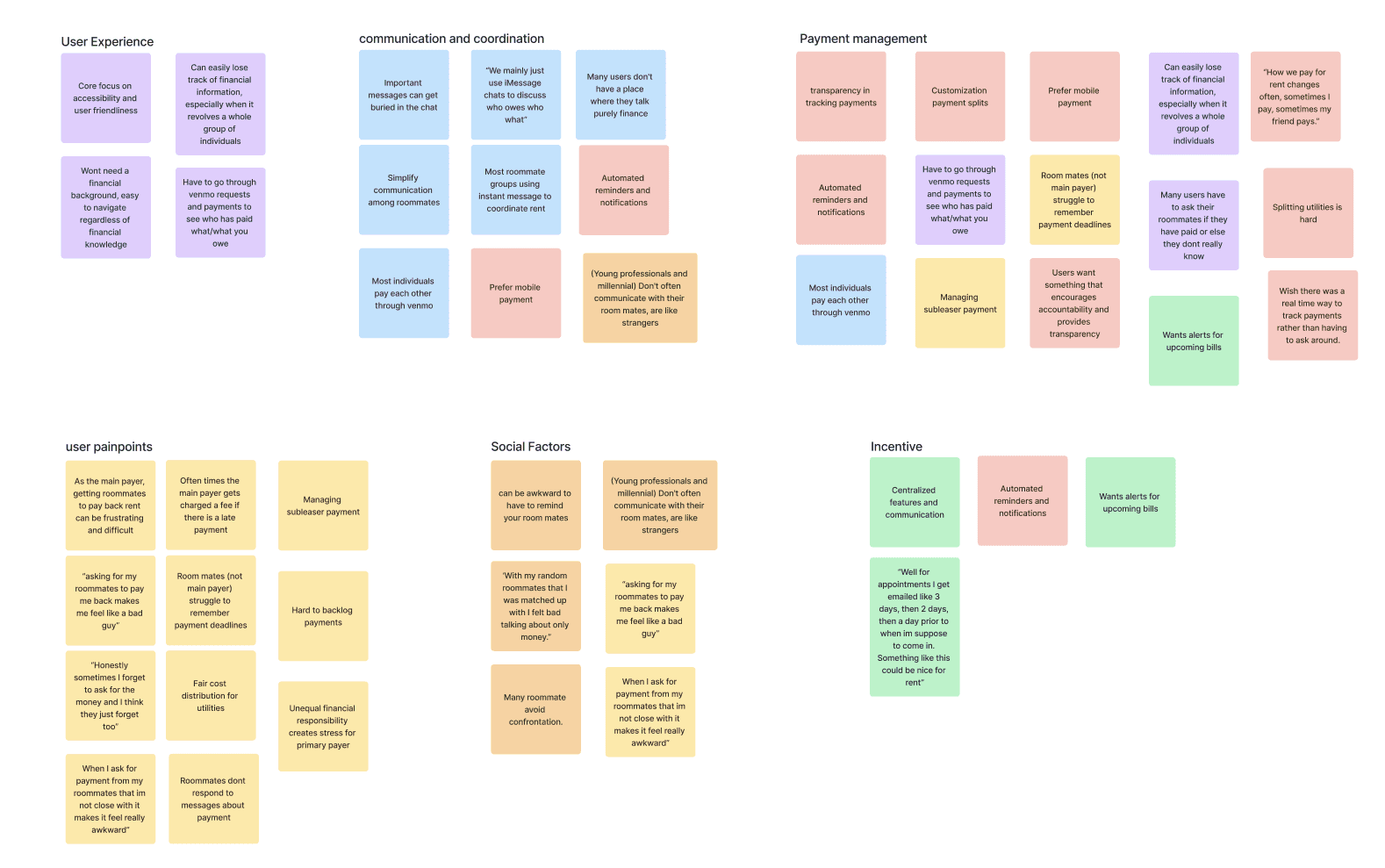
After collecting responses, I used an affinity diagram to identify key patterns and pain points. Instead of focusing on individual responses, I grouped findings into major themes that highlight users' biggest struggles and needs when managing shared rent and expenses.
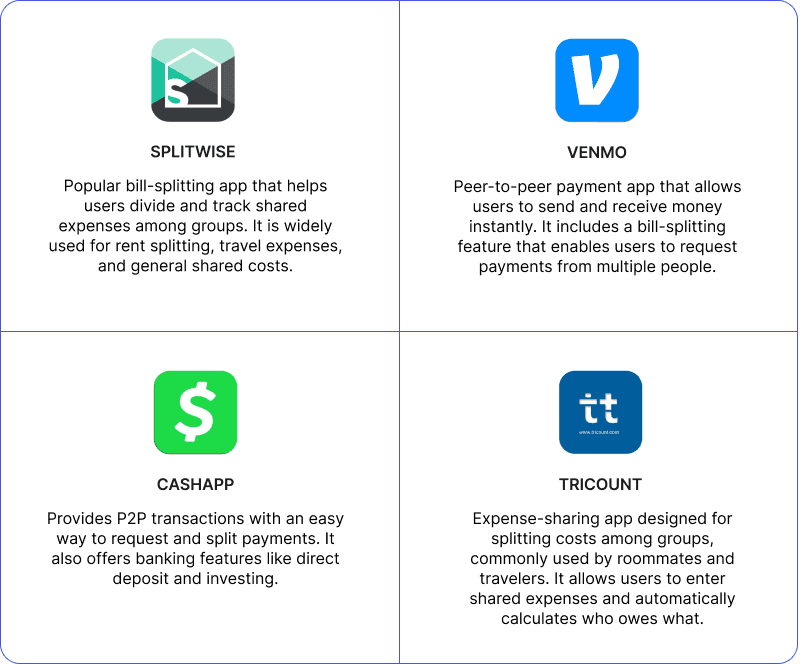
To better understand the strategies and features that resonate with users, we conducted a competitive analysis of four platforms: Splitwise, Venmo, Cashapp, and Tricount
01.
Integrated Communication: None of the platforms include a built-in chat system to discuss rent-related issues—adding this would improve clarity and roommate coordination.
02.
Automated Reminders & Due Dates: Existing apps rely on users to manually check their balances; a dashboard with upcoming due dates would improve usability.
03.
Multi-User Shared Expense Management: Most solutions (except Splitwise) are focused on one-time payments rather than recurring costs like rent, utilities, and shared household expenses.
After our research, we aimed to focus on the key objectives to build an effective rent-splitting tool:
Centralized features
Payment Transparency & Accountability
Flexible Payment Splitting and Seamless Communication
Automated notifications and reminders
This user flow outlines the core pathways users take to navigate RentSplitter. The goal was to ensure a seamless, intuitive experience
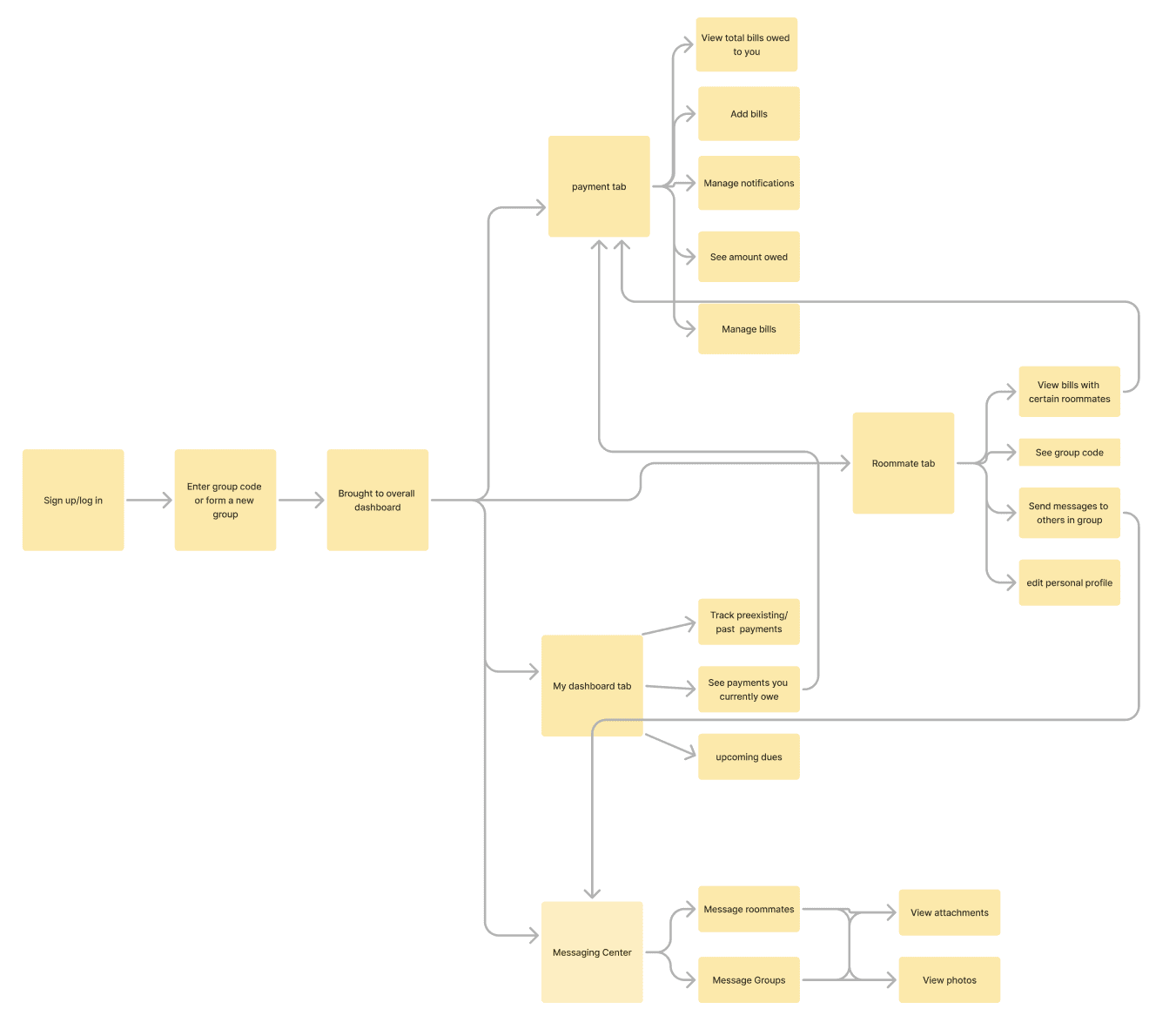
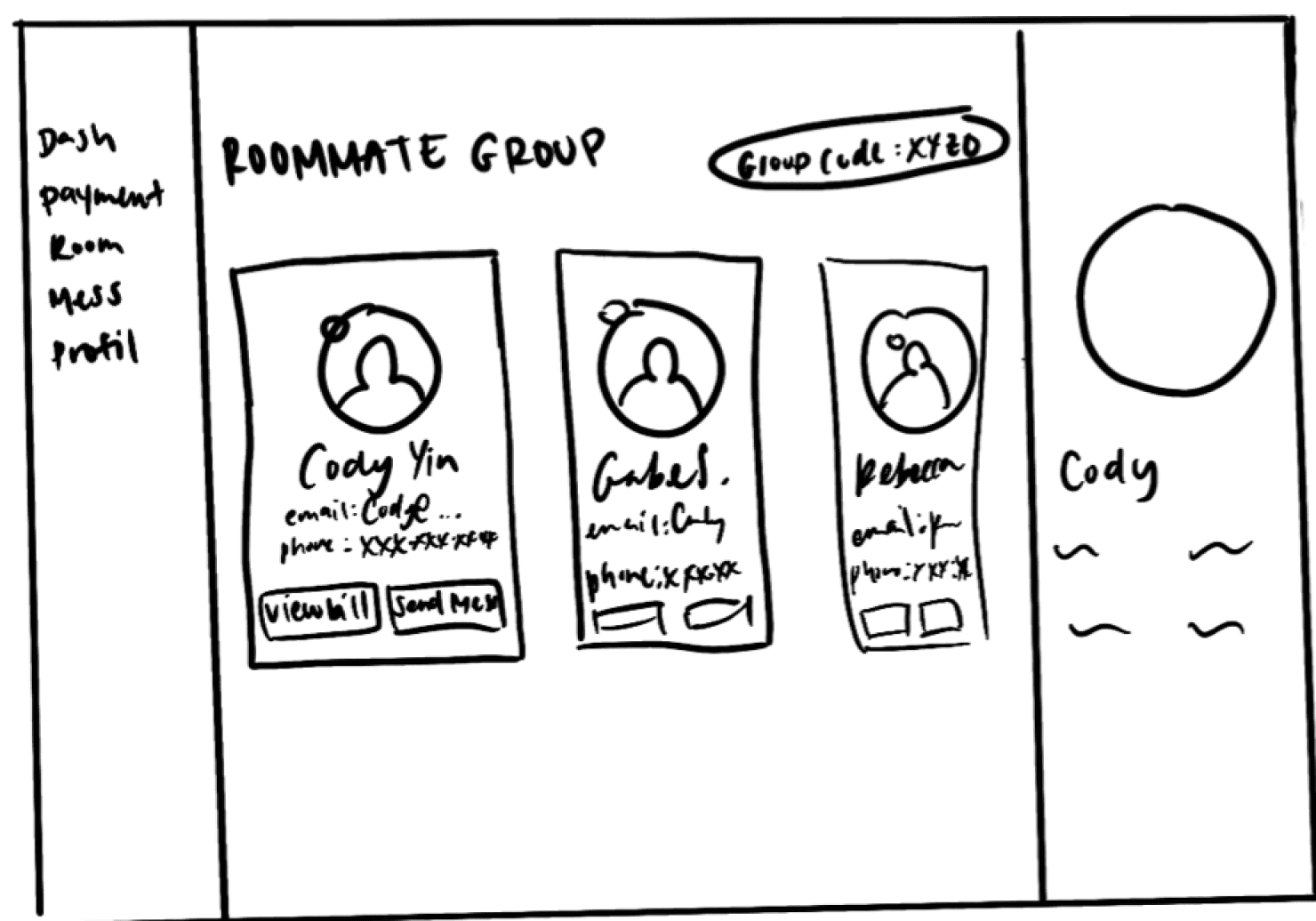
After identifying key user pain points, I explored different solutions to improve rent tracking, automate reminders, and simplify roommate communication. Through quick sketches and iterations, I refined the features that would have the most impact.
Early Sketches
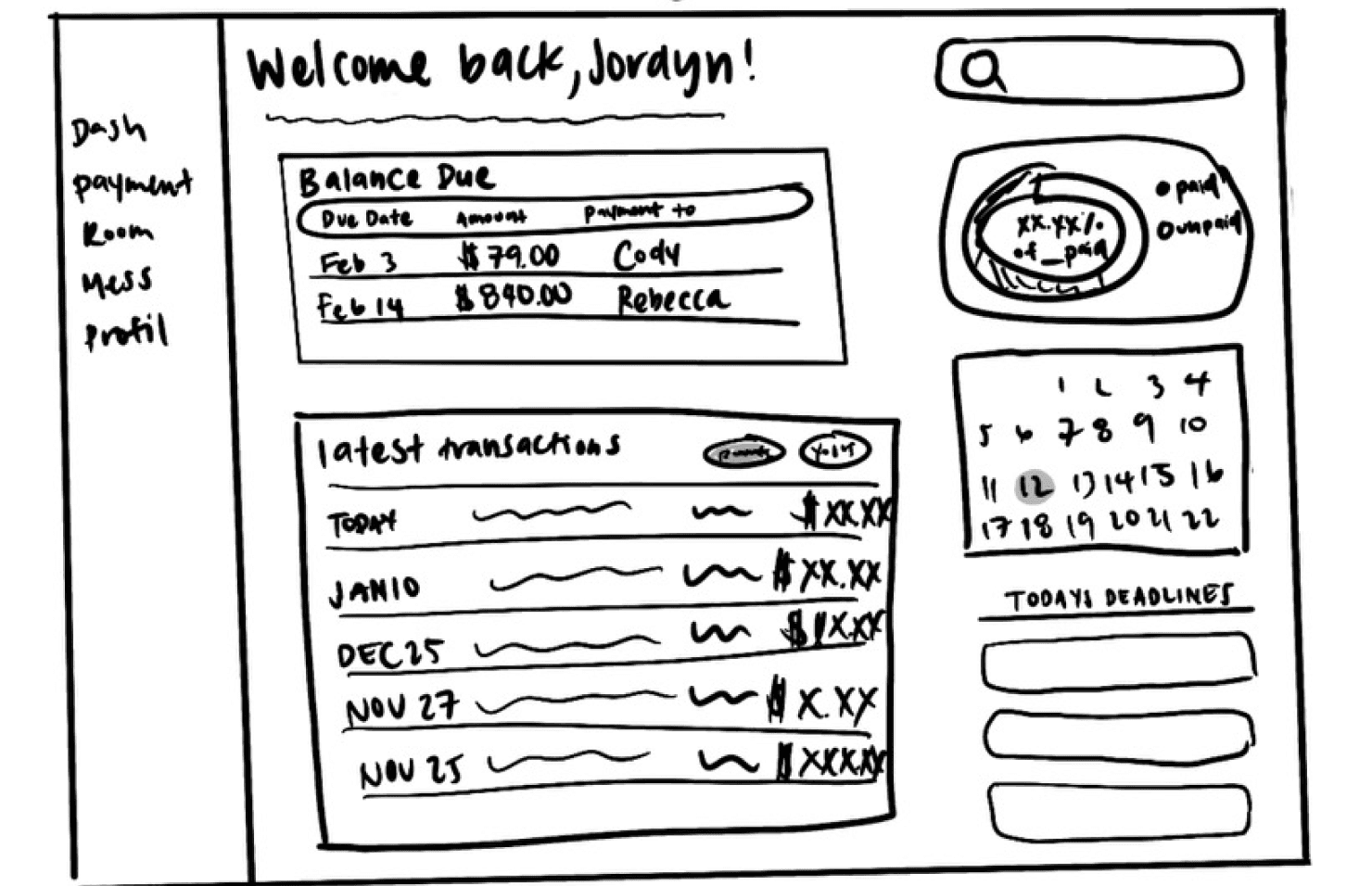
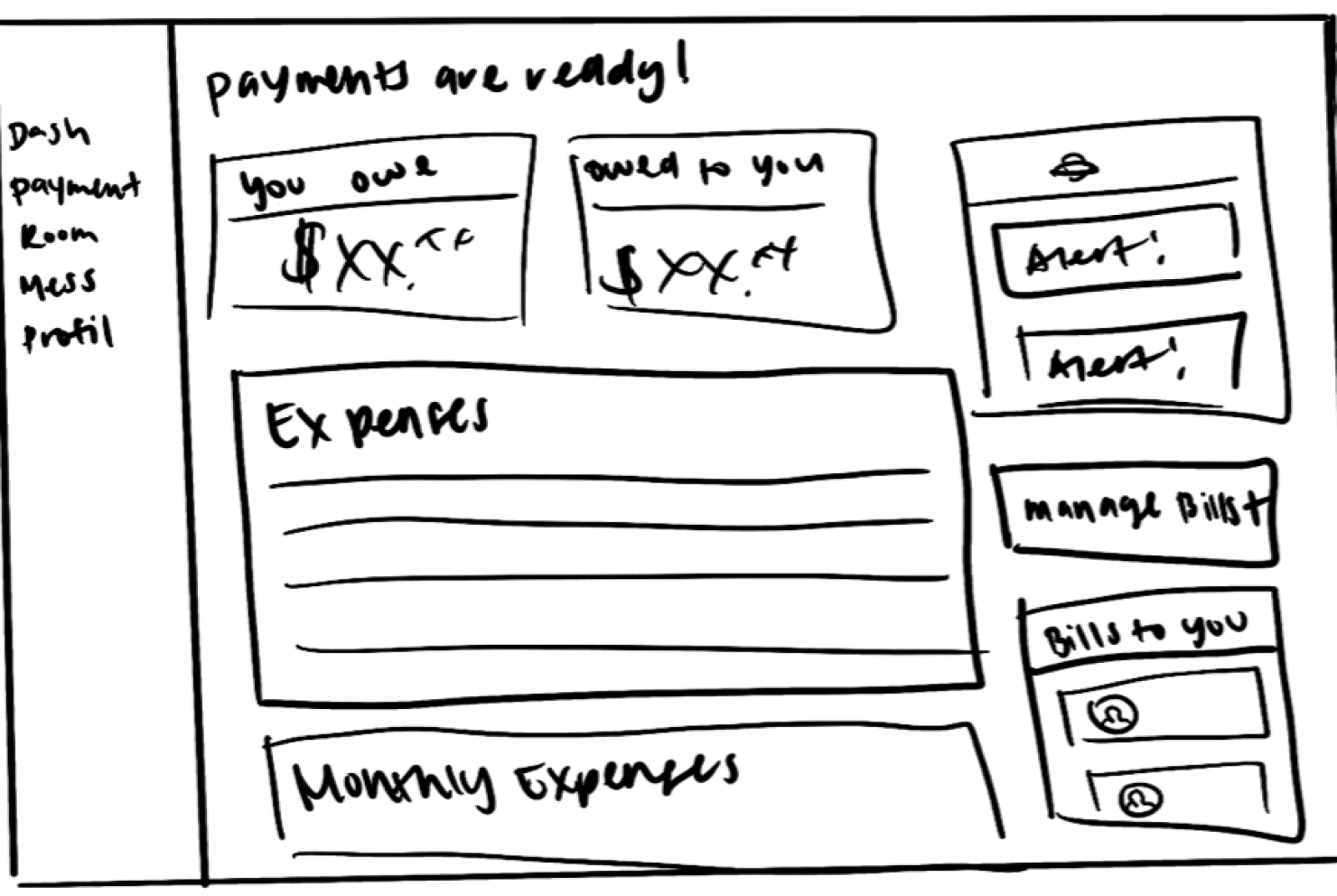
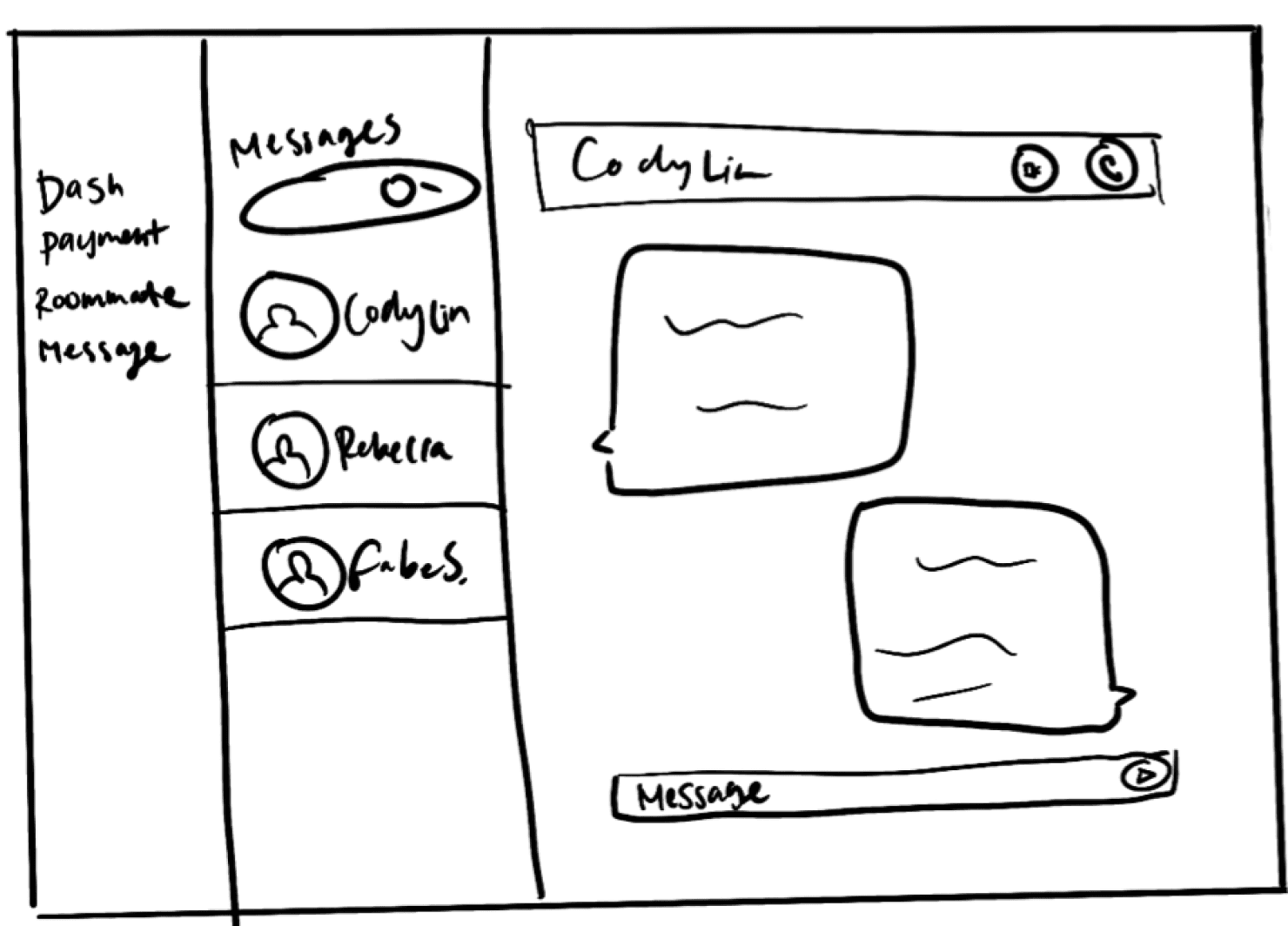
Mid-Fidelity Prototype
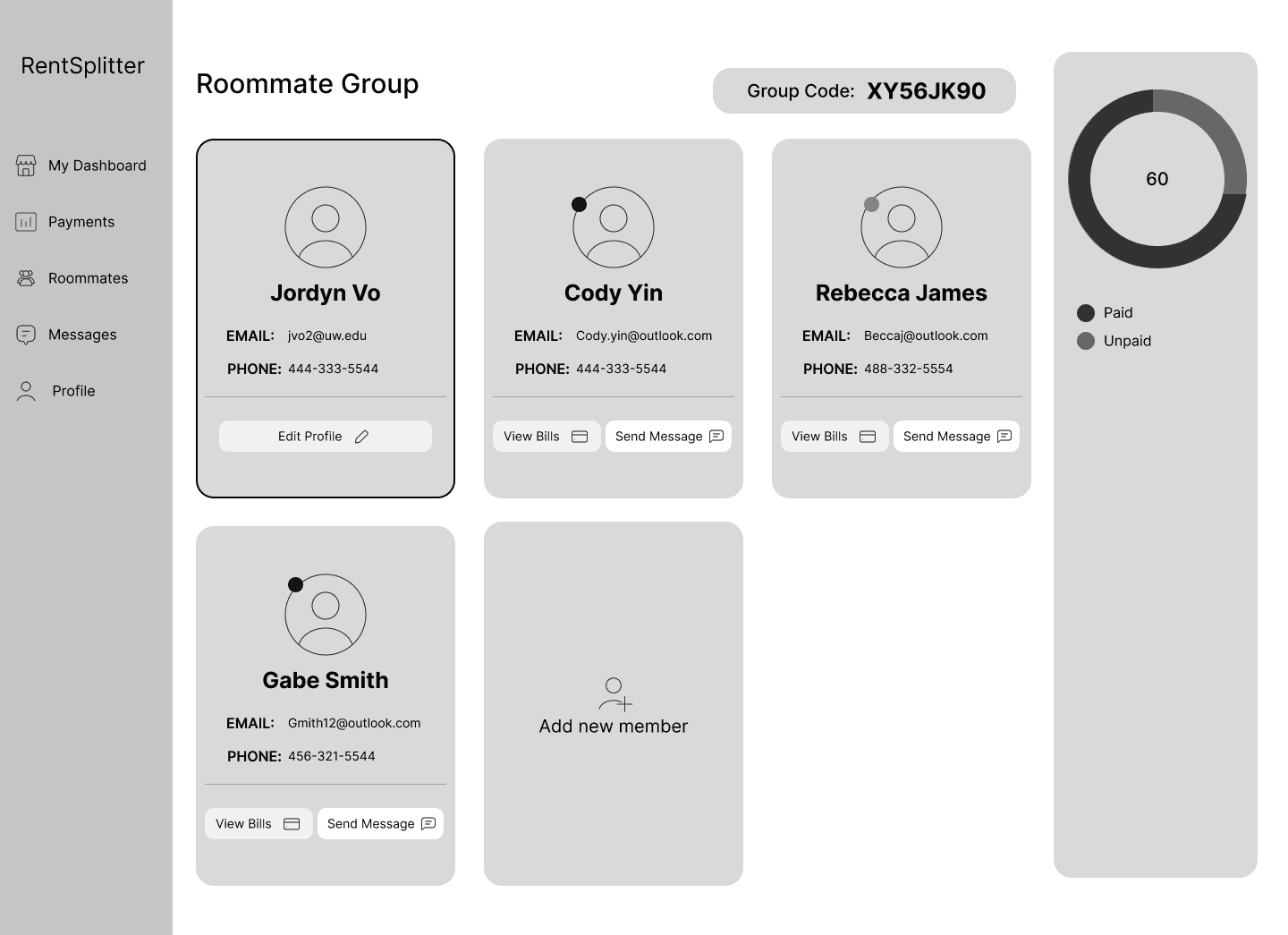
To ensure RentSplitter met real-world needs, we tested the platform with both renters who actively split bills and financially experienced users. This helped validate everyday pain points as well as high-level expectations around clarity and ease of use. Below are some key iterations informed by this feedback.
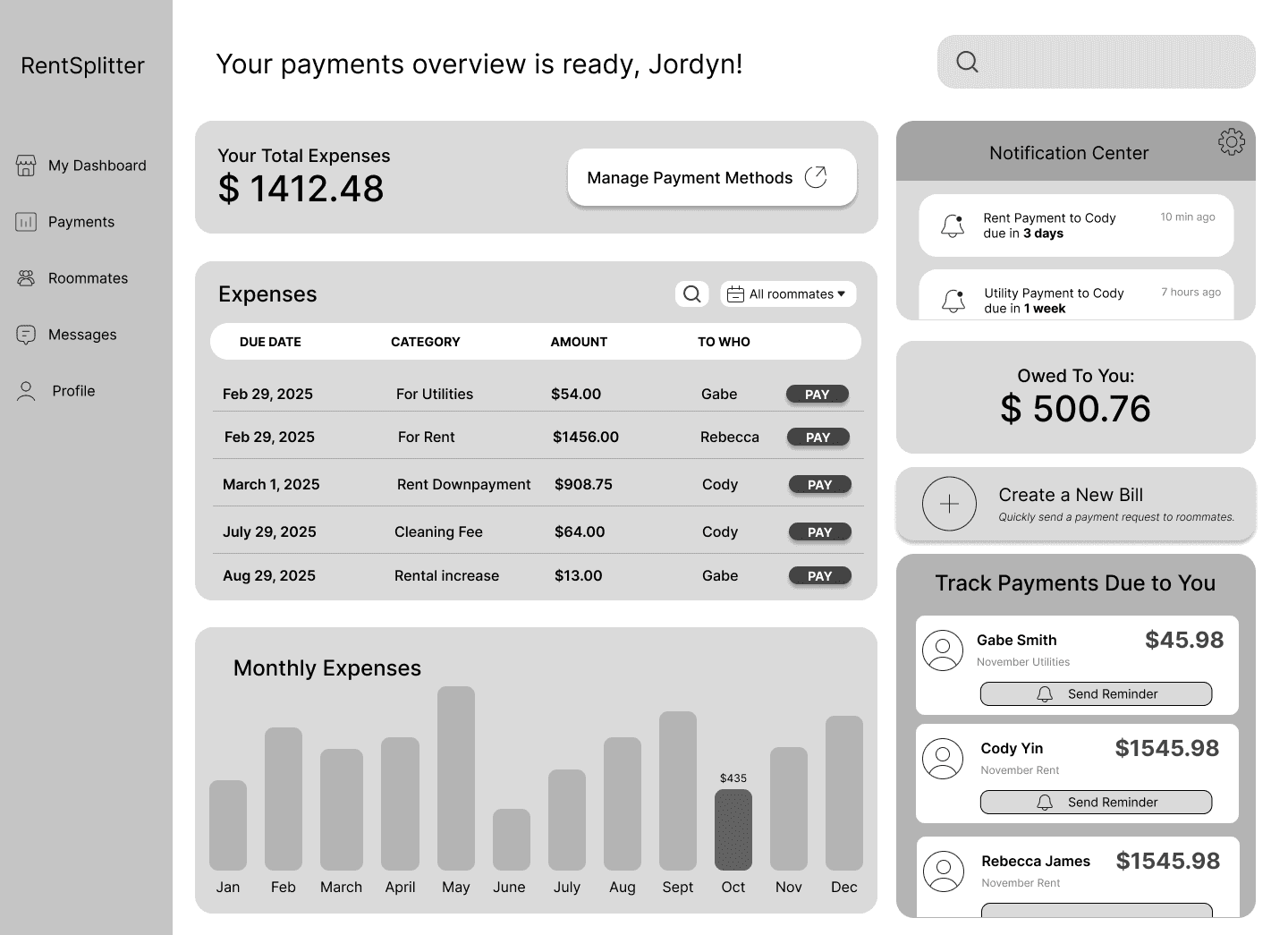
Payment Tab
Design Improvements↴
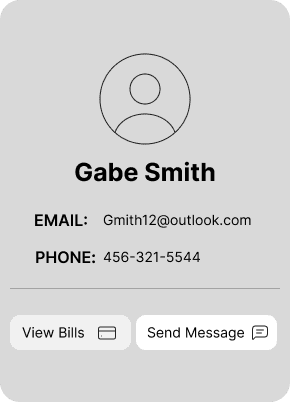
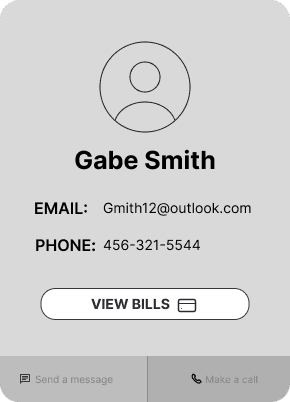
Roommate Tab
Design Improvements↴
Introducing RentSplitter!
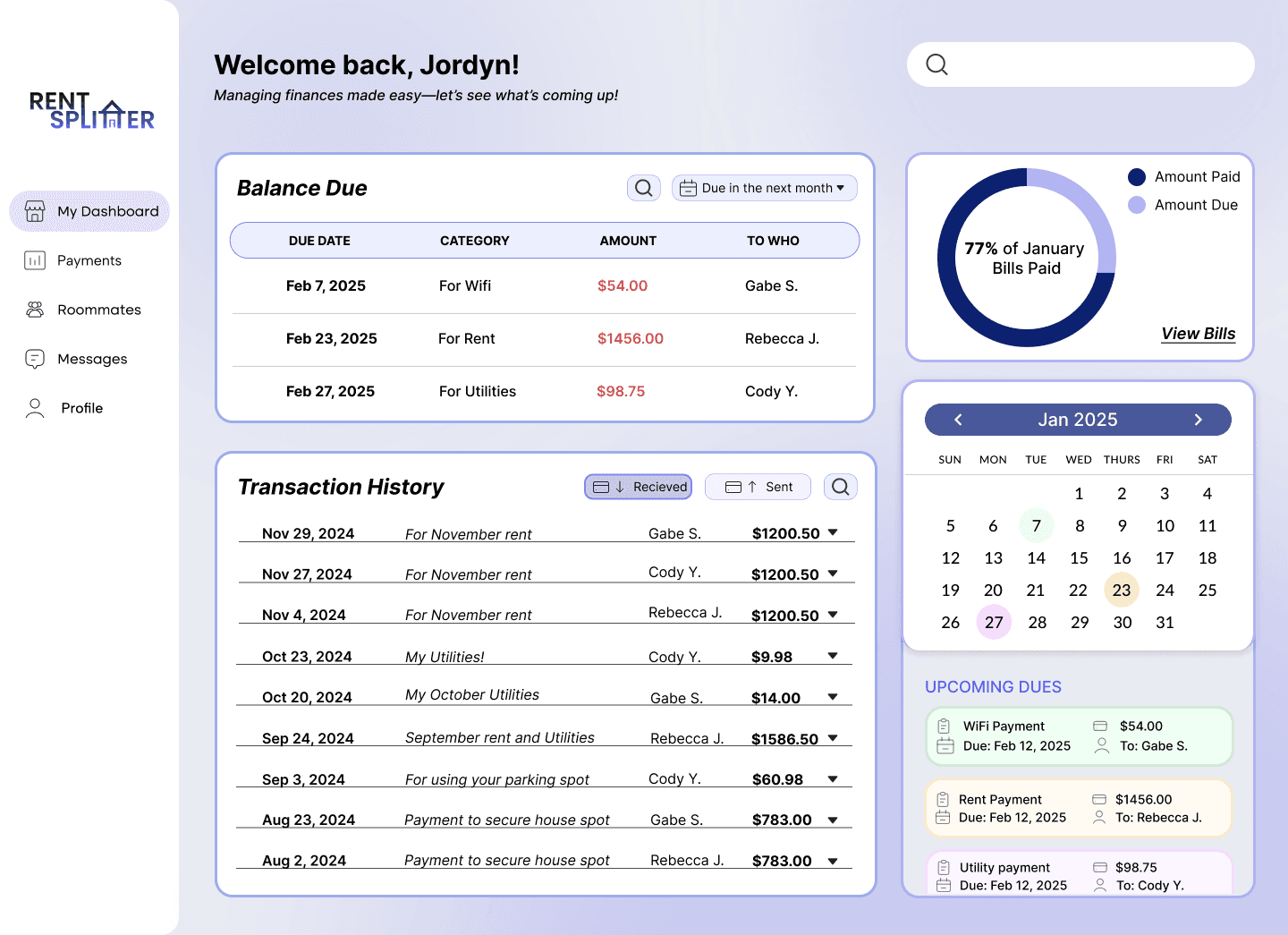
My Dashboard
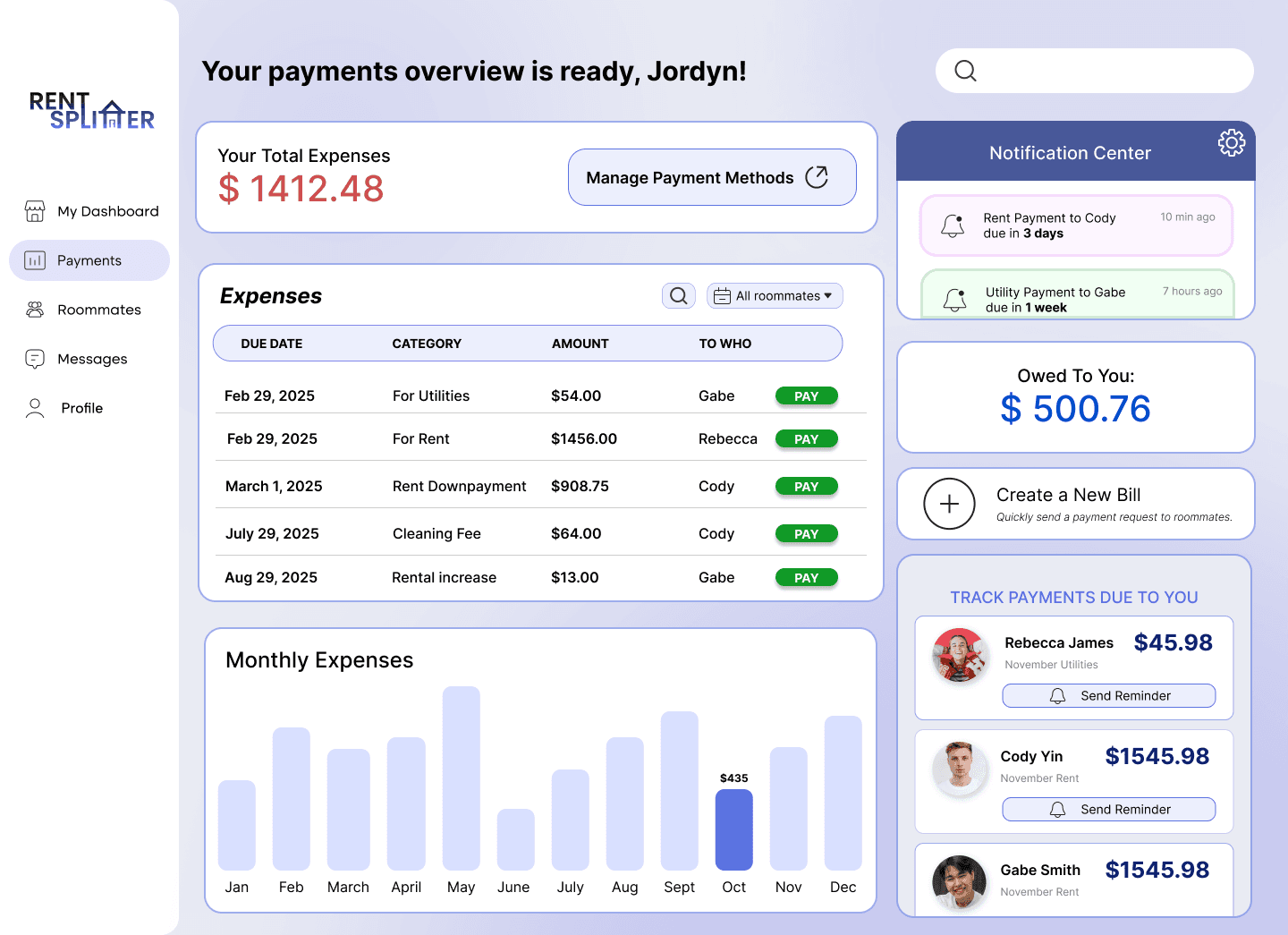
My Payments
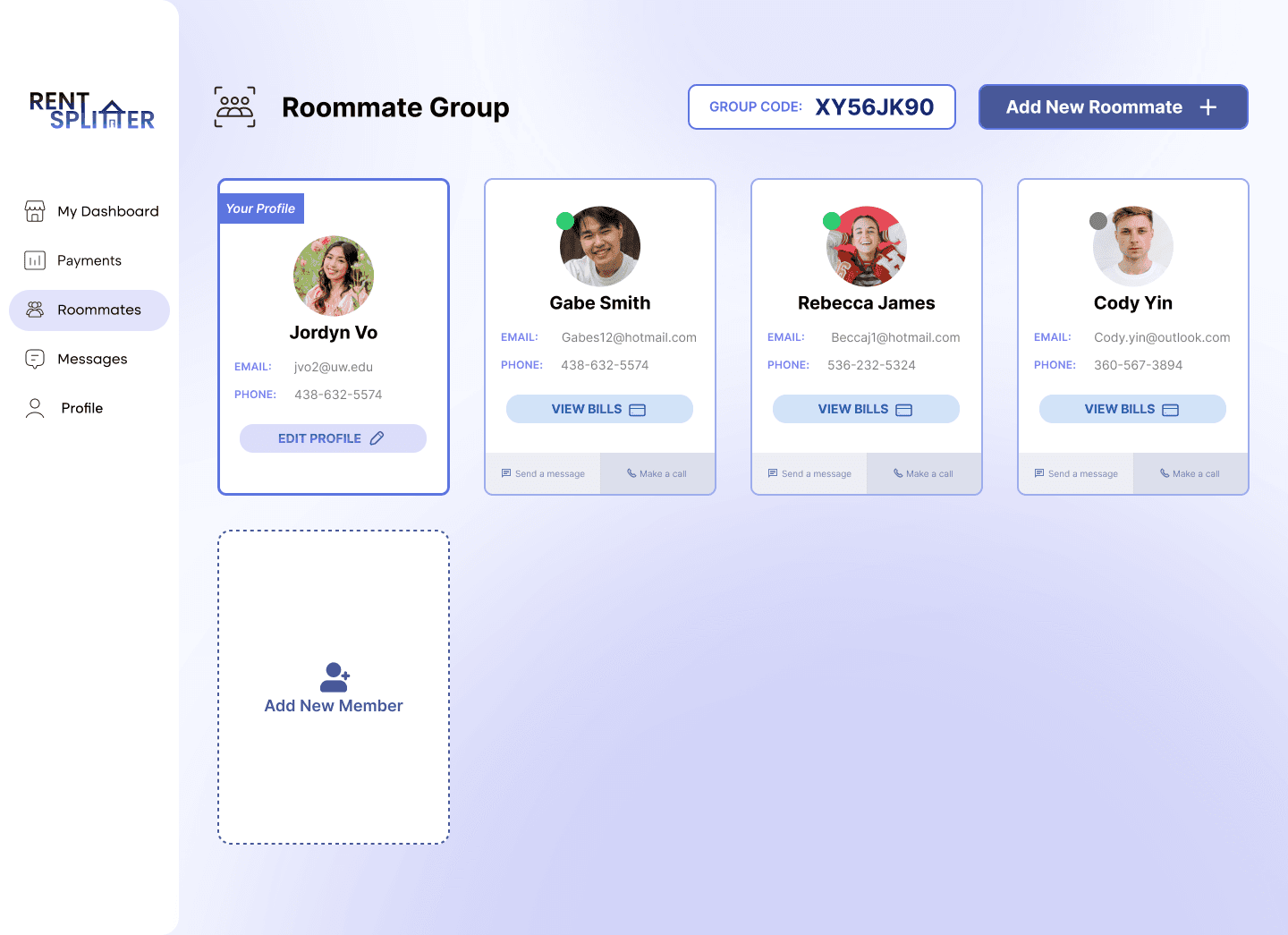
Roommates Page
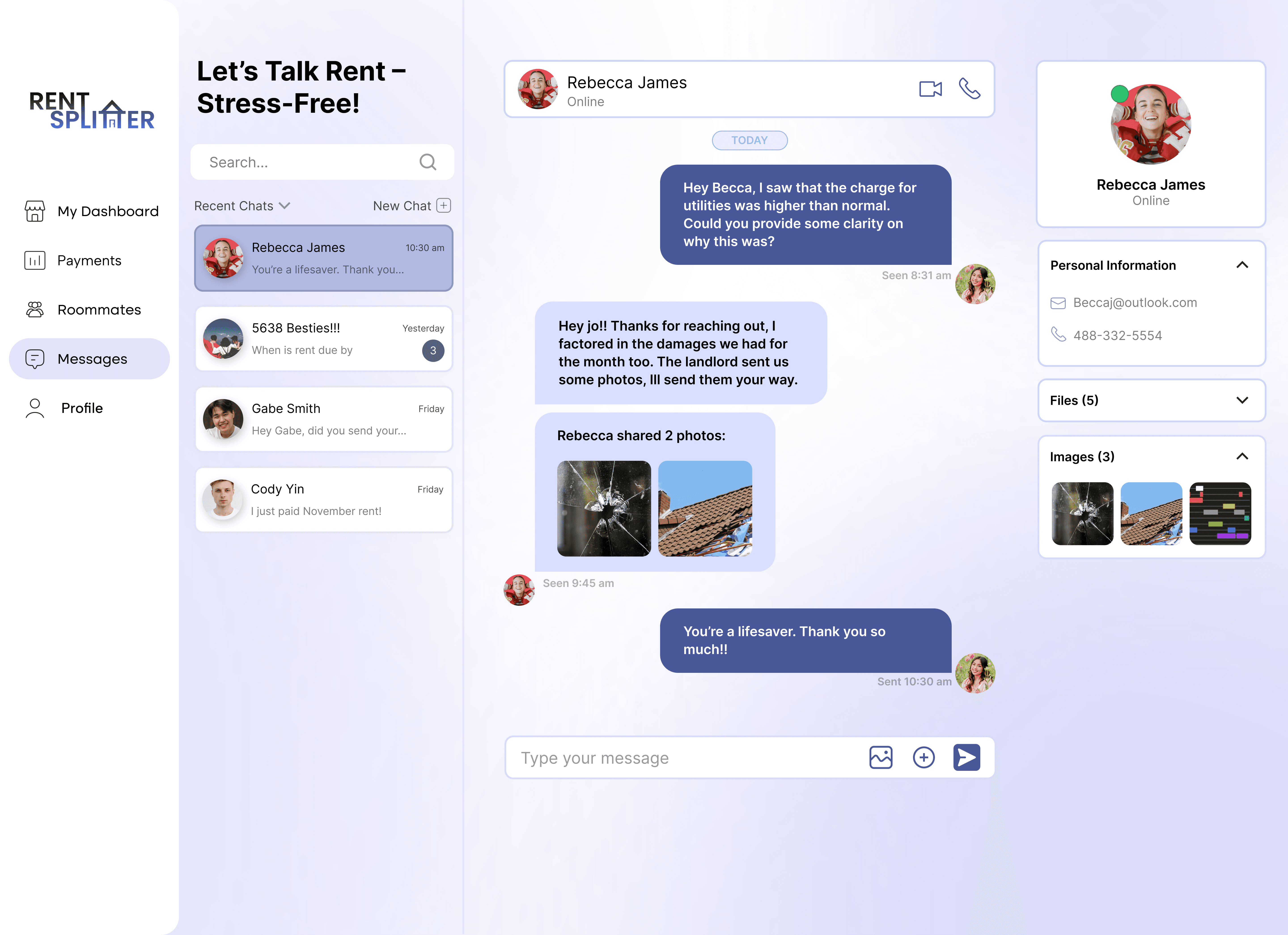
Message Center
Bridging UX and Business Strategy
Throughout this project, I focused not only on designing a seamless user experience but also on understanding how RentSplitter could provide real business value. This process deepened my appreciation for the intersection of UX and product strategy—how design decisions impact user adoption, retention, and long-term viability.
Iterating with User-First Mindset
One of the biggest challenges was balancing usability with feature complexity. Users wanted a clean, intuitive interface, but also detailed control over expenses. Through multiple iterations and user testing, I refined the dashboard layout to optimize clarity without sacrificing functionality. This experience reinforced the importance of lean, user-centered design principles.
A business analysis class at Gonzaga University recently reviewed RentSplitter as part of a case discussion, providing strategic feedback on its financial viability and potential market positioning. Their outside-in evaluation challenged me to think beyond design details and consider product-level decisions that influence long-term success.